
 886-4-22786784
 886-4-22716728
 No. 6, Yuanqu 5th Rd., Taiping Dist., Taichung City 411008, Taiwan
 auxlongspring.com
Products
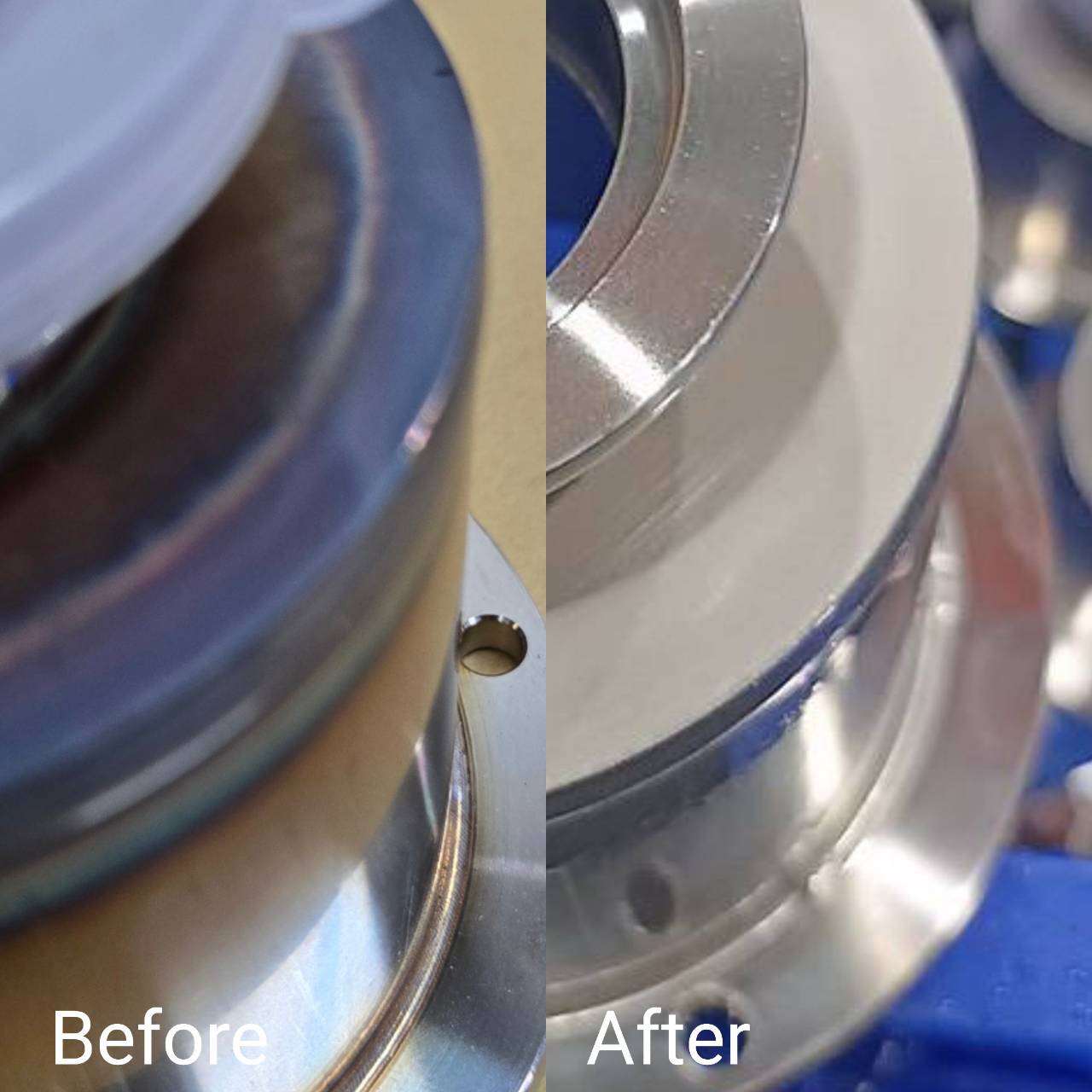
Chemical cleaning is a highly specialized process designed to remove stubborn, irreversible contaminants that physical cleaning methods cannot effectively resolve. Depending on the specific type of contaminant present on the workpiece, we utilize accurately targeted chemical agents to ensure optimal surface restoration.
Common Metalworking Scenarios Requiring Chemical Cleaning:
-
Discoloration and Spotting in Weld Zones → Cause: If the surface of the base metal contains oil or grease prior to welding, the high temperatures during the welding process will destroy the protective oxide layer, leading to heat tint and visible staining.
-
Cutting Oil Residues from Mechanical Polishing → Cause: Intense friction is generated during mechanical polishing. While lubricating cutting oils are necessary to mitigate this, they frequently leave behind stubborn residual grease and oil deeply embedded on the metal surface.
-
Carbonization on Brushed Food-Grade Utensils → Cause: The high heat and pressure applied during the brushing (hairline finish) process can cause localized carbonization on the material's surface, resulting in dark carbon deposits and contamination.
Standard Operating Procedure (SOP) & Processing Standards
-
Step 1: Inbound Intake & Inventory Verification (Confirming item types and quantities upon receipt).
-
Step 2: 100% Visual Quality Inspection (Thorough visual check at a 45° angle from a 20 cm distance).
-
Step 3: Customized Process Planning (Tailoring the chemical treatment formulation and process based on the specific condition of the workpiece).
-
Step 4: Targeted Chemical Cleaning & Verification (For workpieces with damaged oxide layers: chemical cleaning followed by precise manual brushing. For carbonized contaminants: chemical cleaning followed by an initial white wipe test).
-
Step 5: Post-Drying Quality Inspection (Conducting a strict secondary white wipe test after the drying process to guarantee complete surface purity).
-
Step 6: Custom Packaging (Packaged securely according to the client's specific requirements).


