
 886-4-22786784
 886-4-22716728
 No. 6, Yuanqu 5th Rd., Taiping Dist., Taichung City 411008, Taiwan
 auxlongspring.com
Products
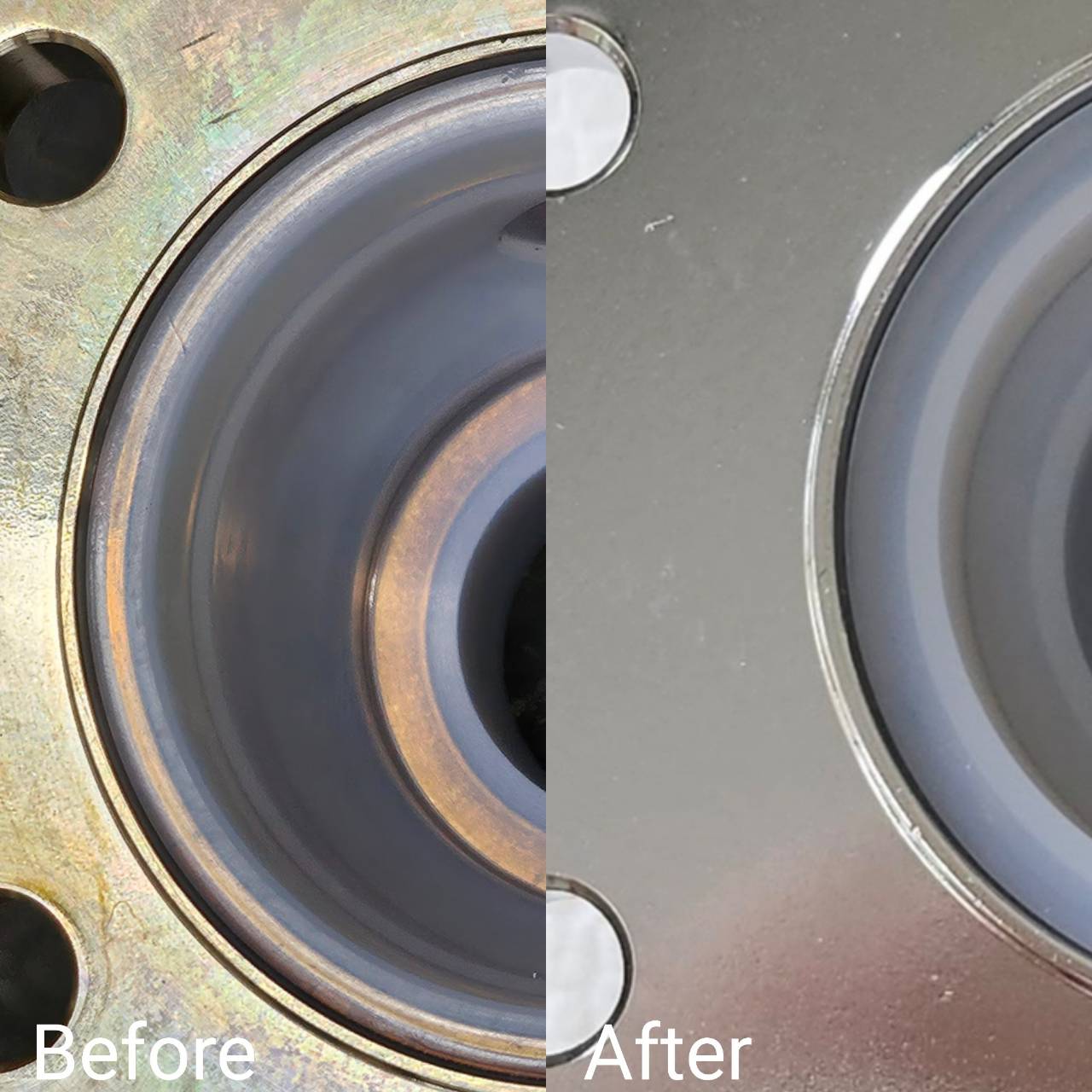
Electropolishing (EP) utilizes electrolytic solutions and controlled electrical currents to establish optimal operational parameters. By leveraging chemical reactions and specific electrical characteristics, this process effectively removes surface defects and impurities from stainless steel products—including burrs, micro-cracks, stains, heat tint, and oxide scale. As a result, critical and essential components achieve an ultra-clean, ultra-smooth finish with highly enhanced corrosion resistance.
Why Electropolishing (EP) Matters
1. Enhancing Surface Properties EP creates a highly uniform and dense metal surface, significantly minimizing microscopic pores and cracks. This process fosters the formation of a robust passivation layer, which exceptionally extends the material's durability—delivering outstanding results particularly in chemical, biomedical, and marine environments.
-
Improves surface finish and luminosity
-
Prevents hydrogen embrittlement
2. Eliminating Machining Defects By electrochemically dissolving microscopic peaks on the metal surface, EP achieves a superior, refined finish. This is especially critical for parts requiring a low-friction surface or high aesthetic appeal, such as medical instruments and decorative hardware.
-
Removes micro-burrs
-
Eliminates post-welding defects and heat tint
3. Maximizing Component Performance The process effectively eradicates machining residues, surface contaminants, and fine burrs. The result is a crevice-free surface that is exceptionally easy to clean and leaves no room for bacterial growth (sterile surface).
-
Reduces the risk of rust and corrosion, boosting overall durability
-
Creates an ultra-smooth surface that prevents dirt accumulation and facilitates effortless cleaning
-
Lowers the risk of premature component failure
Prerequisites for Flawless Electropolishing (EP) Results
To achieve the perfect electropolishing finish, the workpiece must meet the following criteria:
1. Undamaged Original Surface Free of Severe Machining Marks (e.g., deep scratches, tool marks, weld spots, or excessively rough turning marks) → Why: Electropolishing primarily targets and smooths microscopic roughness; it cannot level out or correct deep physical defects.
2. Uniform Material Composition Free of Inclusions → Why: Internal inclusions, porosity, or zones of differing compositions (such as welds or dissimilar metal joints) cause local variations in current density. This can result in uneven polishing, hazing (frosting), or pitting on the surface.
3. Workpieces Free of Bending, Warping, or Overly Complex Shapes → Why: Extremely complex geometries or tight blind spots can cause uneven electric field distribution within the electrolytic bath, preventing effective polishing and leaving dark areas or a frosty appearance.
4. Pre-Shipment Workpieces Free of Surface Contaminants (e.g., residual cutting fluids, weld slag, oxide scale, fingerprints, or glove marks) → Why: Surface contamination directly interferes with current distribution and chemical reaction efficiency. If not removed, the polished surface may develop a rough, "orange peel" texture.
5. No Residual Stress or Structural Variation from Heat Treatment → Why: Metals (especially stainless steel and titanium) subjected to welding or heat treatment may experience surface microstructural changes (such as grain coarsening or hardened zones). Due to differing electrochemical reaction rates in these areas during EP, the final finish may exhibit inconsistent coloration and uneven improvements in surface roughness.
Summary: The key to a flawless electropolishing finish lies in the workpiece itself being "clean, symmetrical, materially uniform, and free of physical defects."
Standard Operating Procedure (SOP) & Processing Standards
-
Step 0: Prototyping & Sample Testing
-
Step 1: Inbound Intake & Inventory Verification (Confirming item types and quantities of the customer's products)
-
Step 2: 100% Visual Quality Inspection (Thorough visual check at a 45° angle from a 20 cm distance)
-
Step 3: Custom Tooling & Parameter Setting (Designing customized jigs and setting operational parameters based on the workpiece's condition)
-
Step 4: Post-Process Chemical Cleaning (To remove residual electrolytes)
-
Step 5: DI Water (Deionized Water) Rinsing
-
Step 6: Drying & Custom Packaging (Packaged according to specific customer requirements)


